
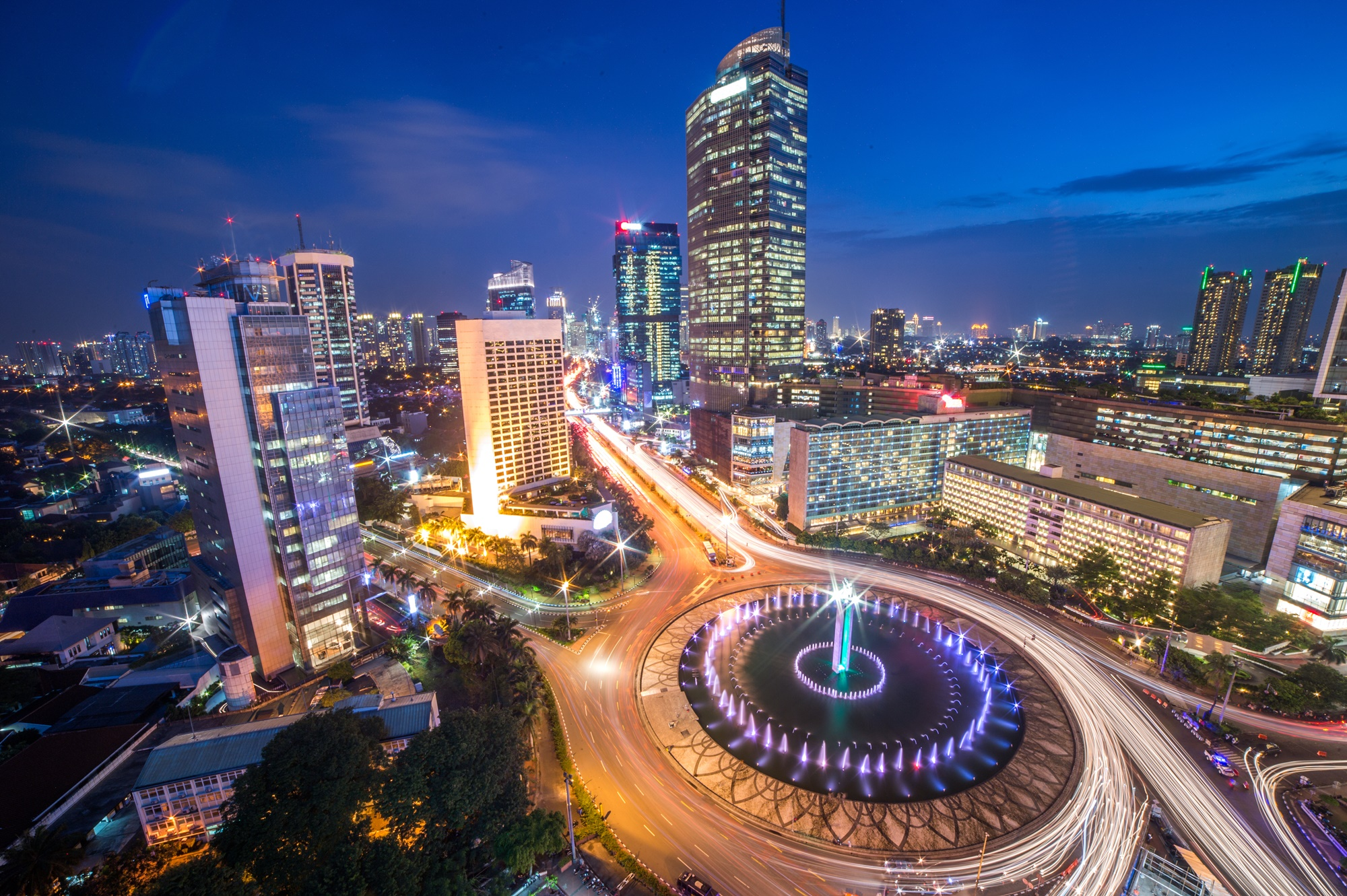
Extension of Call for Proposals for PSi #31 in Jakarta
The earth is also an archipelago, and focusing on the performance in and of smaller iterations perhaps schools us in the methods we need to hold true to geographical actuality across ever greater expanses of sea and land. Once you start thinking about archipelagos, you cannot get far without encountering another island, measuring its distance from the last one, and registering it in all its particularity. (Paul Rae 2019)
Call for Papers
The Performance Studies international (PSi) 2015 Fluid States conference reimagined the traditional academic gathering by dissolving the centralized conference model into a distributed, year-long series of gatherings across fifteen global sites, including the Philippines. This innovative format embodied its conceptual framework: challenging hierarchical knowledge structures and embracing fluidity as both metaphor and material reality.
Partnering with the Critical Island Studies Consortium, mainly based in Southeast Asia, for PSi#31 in 2026, Performance Studies international takes up the theme ‘Archipelagic Flows’ to reopen spaces of discussion and flows of discourse-making opened up by Fluid States, exploring areas of mutual research interest with critical island studies.
The archipelago is not only a geophysical, geographical, topographical, or geopolitical formation; in the conception of theorist Edouard Glissant, it is, more importantly, a figure of lateral relation.
[The archipelago is] a place where we can begin to understand and resolve the contradictions of the world. Across the many islands of the archipelagos of the world, interdependence and difference coexist—and, in this way, they carry the energy that is necessary for the whole globe, our whole world. (Glissant and Obrist 2021: 19)
The archipelago is ’a poetics of how we organize the world’. Our understanding of this notion and the idea that this is what the world needs becomes clearer when Glissant opposes archipelagic thinking to the dominant continental worldview.
Continents weigh us down. They are thick and sumptuous. Archipelagos are able to diffract, they create diversity and expansiveness, they are spaces of relation that recognize all the infinite details of the real. Being in harmony with the world through archipelagos means inhabiting this diffraction, while still rallying coastlines and joining horizons. They open us to a sea of wandering: to ambiguity, to fragility, to drifting, which is not the same as futility. (20-21)
While we are seemingly faced with another binary of archipelago versus continent, a diffracted and ‘quantum’ understanding’ (such as that proposed by Karen Barad) of the power of the archipelagic counter-discourse is what the conference proposes—to unpack, investigate, and in so doing harness and rally for the common aspirations that surely drive our work as artists and academics.
Globality, mondialité… Globality does not homogenize culture. It produces a difference from which new things can emerge. Globality equips us to combat globalization, which… standardizes and dilutes. Globalization reduces communities to a single model, attacking them from the top down, diminishing them. So we need a sense of a world community, of globality, or we cannot combat globalization. (Glissant and Obrist 22-23)
The idea of flows takes from the Fluid States notion of ‘fluxes, density and currents’ of the world ocean, where the archipelagos of the world are connected by the waters, to instantiate both movement and change— movement within and among islands, interactions, and exchanges among the peoples, societies, and cultures in their particularities on those islands, economic exchange, trade and commerce, and so on, and the changes that result from these movements.
We have to accept that our world changes radically and perpetually, and that it changes with us and in us, and that we have an obligation to perceive, to intuit, to sense this change. That’s how we reach utopia. (Glissant and Obrist 69)
Elsewhere in Archipelago Conversations, Glissant says, ‘Our utopia is accepting the idea of change…’ (67)
Thus, the concept of ‘archipelagic flows’ emerges as a vital framework for reimagining world-making in our current global context – a world fractured by conflict, systemic violence, and unprecedented threats to human and non-human life on a planetary scale. Drawing on the metaphor of island archipelagos, this approach addresses a crucial question: How can distinct communities maintain their autonomy while fostering necessary interconnections in the face of ecocide, deepening inequalities, and widespread impoverishment? Karen Barad’s notion of existing “together apart” offers a productive lens for understanding how we might cultivate flourishing conditions across differences. This framework bridges insights from performance studies and critical island studies, suggesting new methodologies for survival and coexistence that transcend simple binaries of isolation versus connection. Like islands in an archipelago, communities can maintain their distinctive characteristics while participating in larger networks of mutual support and exchange, creating resilient systems capable of addressing contemporary challenges while preserving cultural and ecological diversity.
